Safety monitor for underground miners
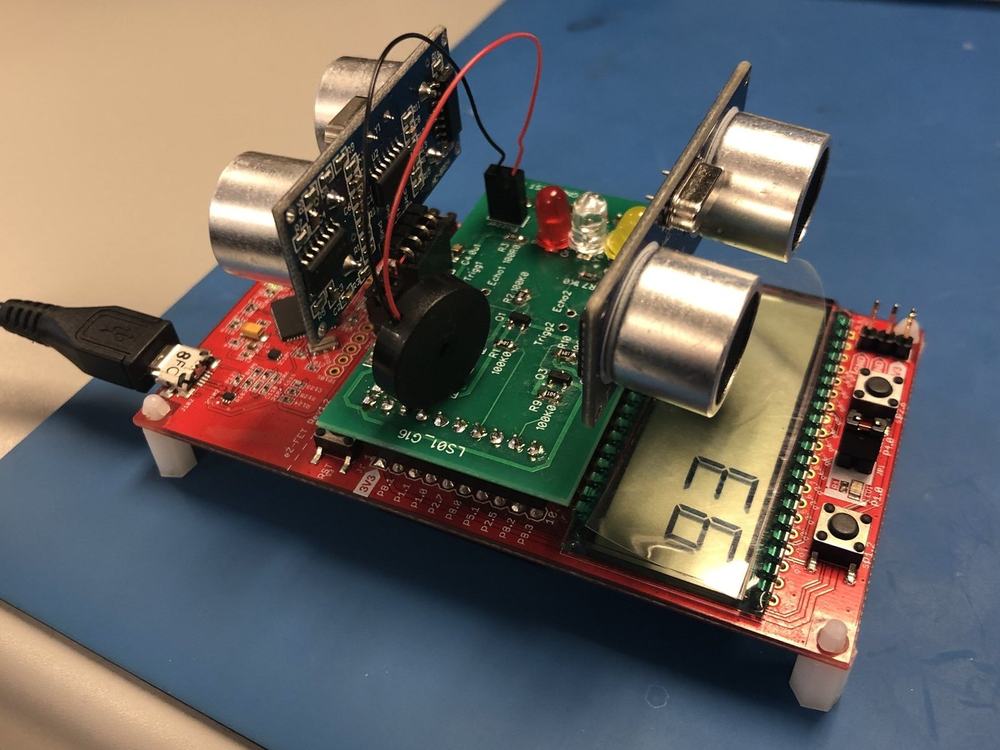
Problem. Underground mining environments can be dark, narrow, and difficult to navigate. A worker or vehicle needs simple, reliable distance awareness from both the front and rear, with clear warnings before objects become dangerously close. The engineering constraint is not novelty; it is robustness.
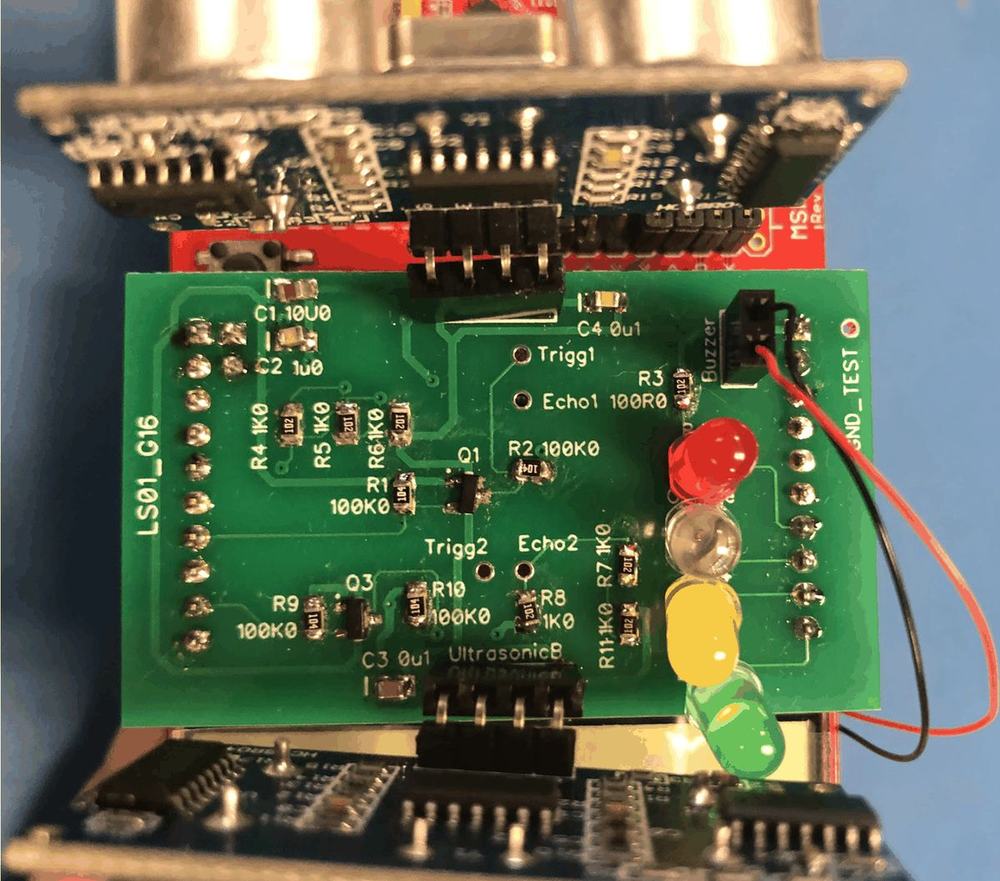
What we did. The system used two ultrasonic sensors to measure front and rear distances. A Texas Instruments microcontroller handled the timing, display, warning light, and alarm logic using low-level C++ firmware rather than Arduino-style abstractions. The hardware included a custom PCB that was fabricated, assembled with reflow, and tested on the bench.
Result. The display alternated front and rear distance readings, and the device triggered visual and audio warnings when the measured gap became too small. A serial communication layer connected the microcontroller to an Android-based field computer, with a Python GUI providing the operator interface.
Why it matters. This is a compact example of industrial embedded systems: sensors, firmware, PCB design, electrical assembly, communication protocol, and user-facing software all had to work together. It is also a useful early signal of the same engineering pattern that appears later in tactile sensing: convert a physical measurement into reliable, actionable data.