Measuring glass thickness without touching
Problem. In a cold-atom quantum experiment, lasers must pass through vacuum-chamber windows before reaching the atoms. The window thickness affects optical path length, focus, and timing. A contact measurement is inconvenient and may not give the clean precision needed for downstream alignment.
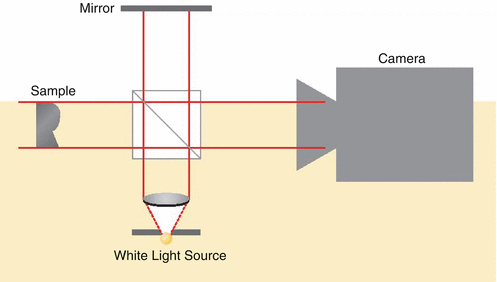
What we did. The project built a white-light interferometer to measure transparent glass thickness without touching the window. Broadband interference fringes and coherence-envelope behavior were used to infer thickness from the optical response rather than from mechanical contact.
Result. The system provided a contactless metrology route for transparent windows used in the cold-atom setup. The measurement could inform laser positioning and optical-path decisions in the larger quantum experiment.
Why it matters. This project is small in hardware but large in discipline. Precision systems often depend on measurements that happen upstream: one metrology number can determine whether the rest of an optical control chain is trustworthy.