Large area high speed stretchable circuits
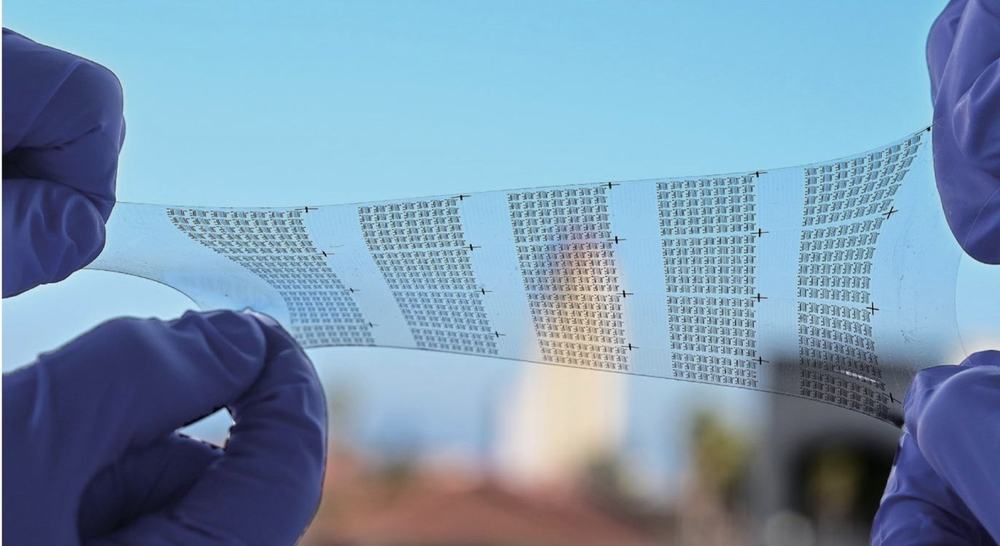
Problem. Soft electronics are attractive because they can conform to skin, organs, and robot surfaces, but early stretchable circuits were too slow and too small for demanding systems. A practical electronic skin needs thousands of devices, fast scanning, reliable interconnects, and enough drive current to read sensors or control displays in real time.
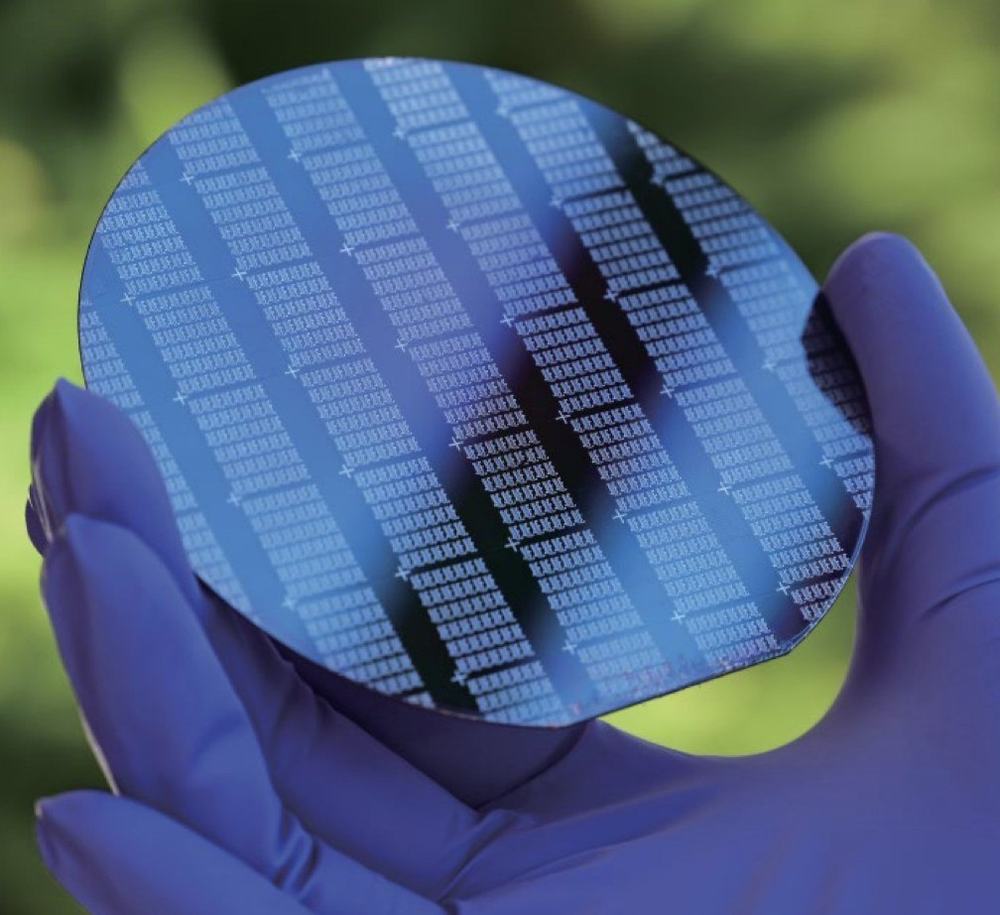
What we did. This work combined materials design, device engineering, circuit layout, and cleanroom fabrication to build intrinsically stretchable transistors and integrated circuits. The system used high-mobility semiconductor channels, low-resistance contacts, elastic dielectrics, stretchable interconnects, and wafer-scale process integration. Contributions on this project included circuit simulation, physical layout of oscillators and logic gates, fabrication, and electrical characterization.
Result. The platform reached an average mobility above 20 cm²/V/s under 100% strain, a device density of 100,000 transistors per cm² including interconnects, and large-scale circuits with more than 1,000 transistors. It also demonstrated stage-switching speeds above 1 MHz, an active-matrix tactile sensor array with 2,500 sensing units per cm², and a stretchable LED display driven at 60 Hz.
Why it matters. This paper moved stretchable electronics from soft single devices toward system-scale circuits. For robotics and wearable systems, that change is essential: the sensor surface should not simply deform; it should also scan, switch, amplify, and deliver clean data fast enough for perception and control.