Automated polarization measurement for white light
Problem. Quantum optics experiments often need to know the polarization state of light very precisely. Manual polarization measurements are slow, and a single photodiode measurement only reports one intensity at one condition. Broadband experiments are harder because the polarization can change with wavelength.
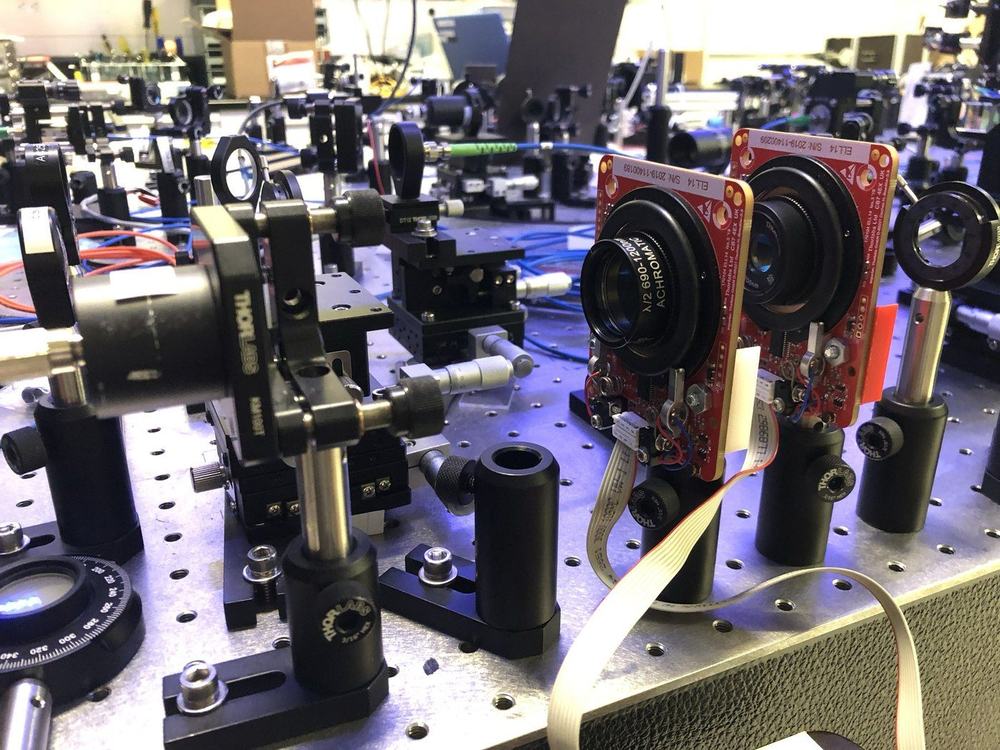
What we did. This project automated the measurement. Two ELL14K piezoelectric rotation stages were controlled through a custom serial driver, moving wave plates and polarizers to programmed angles. A spectrometer was integrated so each motor position could record intensity over a broad wavelength range, and a Python GUI coordinated motor motion, spectral acquisition, data saving, and visualization.
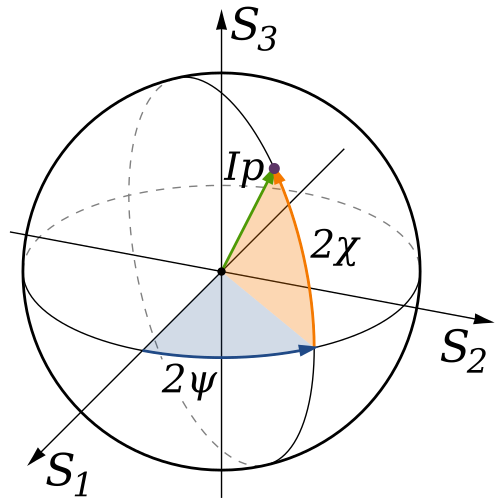
Result. The system reconstructed polarization states across wavelength, including Bloch-sphere style visualizations that made the optical state easier to interpret. The same software-and-hardware framework could also work with a power meter for simpler intensity measurements. The work became a compact tool for the lab and was presented at CLEO 2022.
Why it matters. The value of this project is the full-stack instrumentation: optics, serial hardware control, data acquisition, user-interface design, and physics analysis in one tool. It shows how a bench measurement can be turned into a repeatable instrument rather than a manual procedure.